
About
Think About These Things
The Theology of a Woman’s Body
“In JP II’s teaching, which is not just his teaching, but the whole teaching of the Christian tradition, there’s this analogy in the Bible that God is the bridegroom and humanity is the bride. And the idea is that St. John says this is love, not that we first loved God, but that he first loved us. This puts the creature, whether you’re male or female, in a posture of receptivity before God. This is why John Paul II says woman is the model and the archetype of the whole human race because to be human means to open, to receive divine love, conceive divine love, and bear it forth. That’s the theology of a woman’s body” (Christopher West with Mike Mangione, YouTube, ‘TOB Completely Changed My Artistic Process,’ Nov. 13, 2022).
At a time in our culture when everything true, everything real, has been upended, let us return to Saint Pope John Paul II and his Theology of the Body. Cultural wokeism is so extreme that even the designations of male and female have lost distinction. We are told they are the same, interchangeable, indistinguishable, fluid, and assigned. Ironically and perhaps saddest of all, is that much of this ignominious drivel is coming from the remnants of ardent feminism and the contemporary women’s movement itself. Today young women are unapologetically inculcated with a hatred of their inherent femininity, while simultaneously heralding a combination of androgyny and masculine tendencies. While fluidly vacillating between the male and female, they are taught to decry all forms of true masculinity as dangerous and toxic. This confusion, this uncertainty, can lead only to this: depression, anxiety, fear, and anger. Sound familiar?
The depravity of rejecting male and female results not only in an utterly chaotic society, but it also undermines the very uniqueness of womanhood. When did “sameness” become the aim of our culture? I suppose it is the logical result of other disastrous goals like equity and inclusion. We are not encouraged to celebrate differences; we are told to squash them so that no one feels left out of the group. Of course, this is a schizophrenic position at a time when we are also indoctrinated to acknowledge and celebrate racial differences lest we be labeled racists and bigots. Again, Marxist wokeism is not meant to make sense; its very aim is to divide and scatter. And for people of faith, this, of course, is demonic at its core.
What if more young women were informed about John Paul’s teachings? What if instead of sameness and transgenderism and the lies about gender assignments they learned that they were created in and by God as women: “the archetype of the whole human race”? What if, as West describes, they represent the very essence not only of what it means to be feminine but of humanity itself?
Women! Your greatness doesn’t reside in your ability to be like men, to be androgenous or trans or fluid. Your strength doesn’t rest in your freedom to function sexually like men, to “freely” abort life if you feel like it, or to live autonomously or uncommitted without husbands or children. Your greatness is born out of your very bodily identity as woman. Only in you is life conceived. Only in you does it spark and then grow. Only through you does humanity flourish. You are the unique, essential participant in God’s plan. One woman lost the world, but another who came after her said “yes” to God and participated in its salvation.
Girls, women, know who you are. This greatness is your identity. This is why God made you. You have a purpose. It is through your bodies and hearts, full of faith and charity, that society might actually be saved once more.
You Shall Not Be Overcome
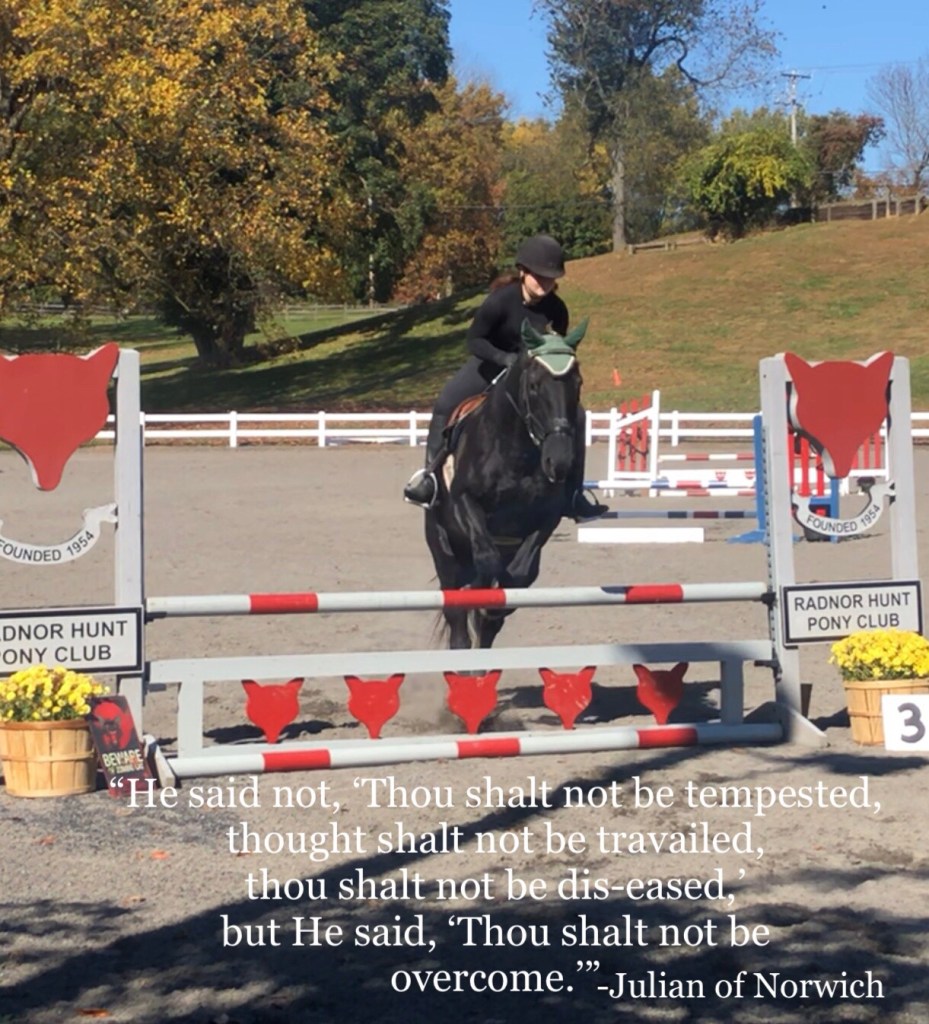
We are not meant to avoid pain. We are to acknowledge it. Look at it. Enter into it, but only with the Lord. For it is with Him that rather than be overcome, we shall instead be transformed.
Look for the Joy
In Tender Compassion
“In the tender compassion of our God the dawn from on high shall break upon us, to shine on those who dwell in darkness and the shadow of death, and to guide our feet into the way of peace” (Lk 1:78-79).
Zechariah spoke these verses upon the birth of his son, John the Baptist. Filled with the Holy Spirit, he prophesized that John would “go before the Lord to prepare his ways, to give knowledge of salvation to his people” (Lk 1:76-77). For the Holy Spirit, the love between father and son, always encourages movement and action. He knew that John would play a vital role in the salvation story. John would till the field, as it were, to ready it for the One yet to come who would sow fertile seeds of the new Way and show us how to reap its fruits.
Zechariah knew, however, that there would be darkness and death. The Way would be perilous and often uncertain, even for those who believed. And yet, the prophet understood that our God is one of “compassion.” Because He loves us, he would “break upon us” and “shine” brightly in the darkness to “guide our feet.”
Let us remember today, in the midst of our own darknesses, upsets, disappointments, and uncertainties, these words of Zechariah. God is always with us, ready to break into our sadness and despair. He knows all and will guide us. As were the prophet and his son, we must remain open to this goodness and salvation. May we, even when surrounded by darkness in low places, turn towards the “dawn from on high” that will light our paths and lead us to “peace.”
We All Have Crosses
“You can take the cross out of your room, but you can’t take the cross out of your life.” Fr. Mike Schmitz
For all of those who have relegated religion and faith to the sidelines or trash cans of their lives, here is something that is true. Yes, there actually is objective truth.
We will all bear crossed in our lives. Suffering is part of being human. Whether we choose to call them crosses or just difficulties, injustices, or tragedies, we will all experience them.
Why are so many of us, especially young people, desperately unhappy? First, they don’t know that to suffer, to bear the cross, is normal. Not easy, normal.
More importantly, though, if we don’t know about the ubiquity of life’s crosses, we won’t know how to carry them. We won’t know how to sit at their feet, acknowledge our hardship, and with open hearts and minds, reorder ourselves to goodness and hope.
Darkness without hope is despair. Pain without transcendence leads to perpetual misery. It is in acknowledging the cross that we discover meaning and can begin to move through pain and toward the good. Even towards happiness and joy.
No, we can’t remove crosses from our lives. But actually, we wouldn’t really want to. For it is on the cross that our fears are vanquished and our hopes are resurrected. It is there that we actually experience a rebirth.
The cross isn’t the end. It’s actually just the beginning.
Doesn’t that change everything?
Be Forewarned and Grow in Grace
“[I]n accordance with his promise, we wait for new heavens and a new earth, where righteousness is at home. Therefore, beloved, while you are waiting for these things, strive to be found by him at peace, without spot or blemish; and regard the patience of the Lord as salvation….There are some things in [Paul’s letters] hard to understand, which the ignorant and unstable twist to their own destruction, as they do the other scriptures. You therefore, beloved, since you are forewarned, beware that you are not carried away with the error of the lawless and lose your own stability. But grow in the grace and knowledge of our Lord and Savior Jesus Christ” (2 Peter 3:13-18).
Friends, as I go about my day, listening to the news and talk radio, I have been inundated with more seemingly unbelievable developments in our culture. From Planned Parenthood opening mobile abortion clinics around the country to transgender kids being allowed free use of formerly single-sex locker rooms to universities mandating masks even if a single student or professor desires it, the world is obviously more upside-down than ever. We are, indeed, surrounded by ignorance, instability, and moral chaos.
I admit it sometimes seems like too much to bear. This is when we turn to the Scriptures and allow God to remind us of the Truth. We are called to “wait for new heavens and a new earth, where righteousness is at home.” In the meantime, though, let us seek “patience,” as well as the fortitude to live in this world prudently and charitably. Let the “grace and knowledge of…Christ” strengthen us as we serve others in a world where confusion and suffering abound.
Speak the Truth
“[D]o not be afraid. These are the things that you shall do: Speak the truth to one another, render in your gates judgments that are true and make for peace, do not devise evil in your hearts against one another, and love no false oath; for all these are things that I hate, says the Lord” (Zech 8:15-17).
How many times have we heard from parents, teachers, or even loving religious folks that it’s wrong to hate? Religious people don’t hate; they love. Right?
But here God reminds us that we are in fact called to hate evil. “Those who love the Lord must hate evil,” Dennis Prager has reminded us for decades. And of course, that’s right. We must speak the truth and work for peace, but we who love what is good must also be spiritual warriors. “Prepare war,” we read in Joel. “Let all the soldiers draw near, let them come up. Beat your plowshares into swords, and your pruning hooks into spears; let the weakling say, ‘I am a warrior.'” (Joel 3:9-10).
“Devis[ing] evil,” “lov[ing]…false oath[s]”–these are the “things” God rejects, and so must we as well. As we continue to confront the evils of our time, let us keep all of this in mind. We shall rightly order ourselves to the truth, love one another, work for peace, and stand firmly against evil. May we seek in all things to do God’s will and serve each other with fortitude and in charity.
Exhortations of Hope and Salvation
“So then let us not fall asleep as others do, but let us keep awake and sober….[S]ince we belong to the day, let us be sober, and put on the breastplate of faith and love, and for a helmet the hope of salvation. For God has destined us not for wrath but for obtaining salvation…” (1 Thes. 5:6-9).
It is so tempting these days to despair. The world seems wedded to a litany of upside-down values that many argue as truths, but in reality, are nothing but lies. We have become habituated to gossip, sensationalism, soundbites, victimization, blame, scandal, and a win-at-all-costs mentality. If asked to define virtue, generations of people now would not only be unable to do so, they would probably laugh at the idea that there is such a thing.
But for those of us who believe in objective truth, for those of us who try daily to rightly order our minds and hearts to God, we look for the virtues to guide us and help us to act rightly in accordance with God’s will.
Indeed the challenges we face are daunting. We are in a battle for our culture, our faith, and our very souls. Some days it seems there is nothing we can do–that we are powerless to confront the onslaught of lies and distortions perpetuated by politicians, the media, and those we meet every day who have been blinded by ideology.
But we are not powerless. As Paul exhorts, we are to “keep awake and sober” and put on the armor of God–“the breastplate of faith and love, and…a helmet of hope.” This helmet is to protect our minds from despair. At risk of being consumed by the evil that tempts us to turn away from goodness and salvation, we must keep vigilant. We must enter into the intellectual, cultural, and spiritual battle of our time armed with helmets that will shield us from chaos and keep our thoughts clear and intentional.
After all, “we belong to the day.” Let us enter our daily battles, convicted of this truth, and willing to share God’s light with all who will listen.
 To Live Gladly